
Gisela Lange · 26 September 2026
Connecting rural pathways: How expanded transit options reshape daily rhythms in isolated settlements
Isolated settlements have long operated on schedules dictated by distance and limited mobility options, yet recent expansions in rural transit systems are altering those patterns across multiple continents. Data from government agencies shows that new bus routes, community shuttle programs, and demand-responsive services are connecting villages to regional centers with greater frequency, and residents are adjusting work commutes, medical appointments, and supply deliveries accordingly.
Background on rural connectivity gaps
Many settlements located more than 30 kilometers from the nearest town center once relied on infrequent private vehicles or weekly mail runs for essential travel, according to figures from the U.S. Department of Transportation. Researchers at several universities documented how these constraints compressed daily activities into narrow windows, forcing people to combine errands into single trips that could last an entire day. Government records indicate that populations in such areas experienced higher rates of missed healthcare visits and limited access to part-time employment compared with urban counterparts.
Studies compiled by Transport Canada reveal similar patterns in remote Canadian communities, where seasonal weather further restricted road travel and left residents dependent on neighbors or costly taxis. European Union transport reports highlight comparable situations in parts of Eastern Europe and Scandinavia, where aging demographics and sparse populations made traditional fixed-route services economically challenging to maintain until policy shifts introduced subsidized micro-transit models.
Transit expansions underway for September 2026
In September 2026 several pilot programs are scheduled to launch in selected rural districts of Australia and the United States, adding evening and weekend services that previously ended by mid-afternoon. These initiatives include coordinated timetables between regional rail and local feeder buses, allowing passengers to reach larger employment hubs within two hours instead of the previous four-to-five-hour journeys that often required overnight stays. Officials at the Australian Department of Infrastructure, Transport, Regional Development, Communications and the Arts have published route maps showing new stops at previously bypassed hamlets, while parallel efforts in the American Midwest focus on electric minibuses that operate on flexible booking systems via mobile apps or community call centers.
Implementation data indicates that participating settlements will gain between four and eight additional round trips per week, depending on population density. Operators are incorporating real-time tracking to reduce wait times at isolated pickup points, and maintenance depots are being established in county seats to support the expanded fleets.
Adjustments in daily routines
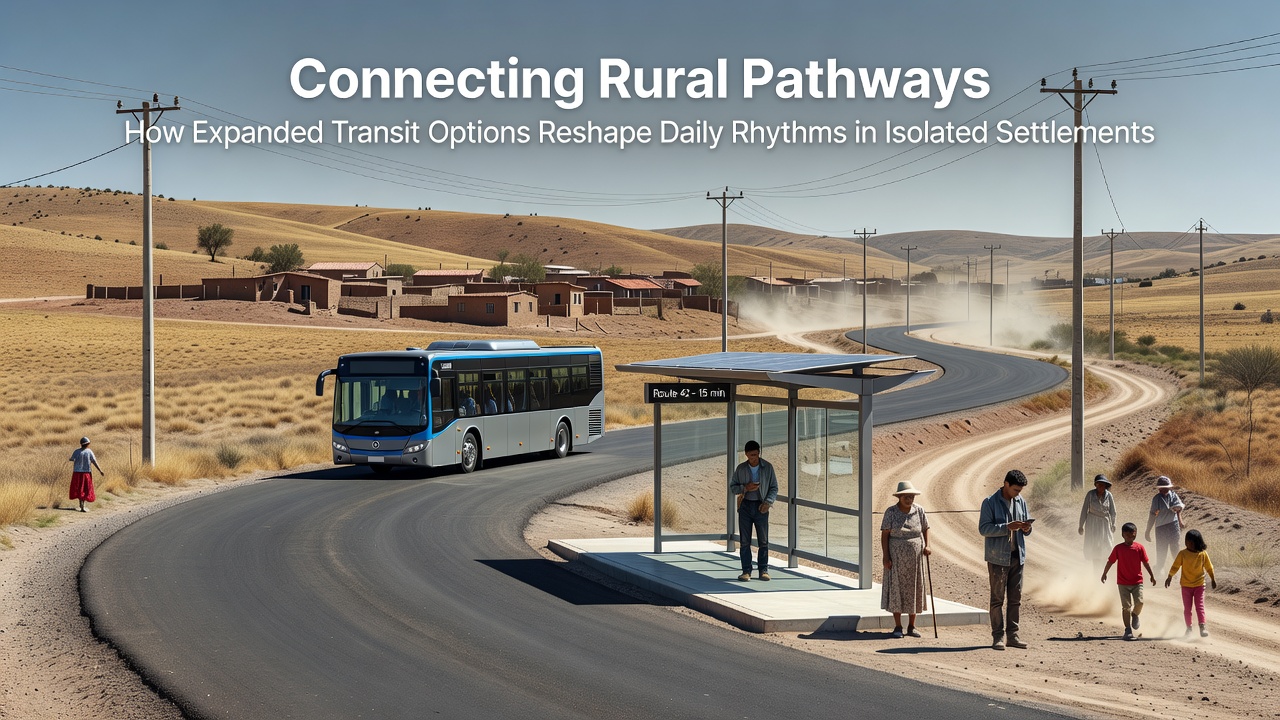
People living in these settlements report reallocating time previously spent waiting for infrequent rides or arranging carpools. Schoolchildren gain the option of after-school activities without relying on parental pickup, while shift workers can accept evening positions at distribution centers located 40 kilometers away. Healthcare providers note an increase in scheduled follow-up visits because patients can now return home the same day rather than remaining overnight in town. Local markets and pharmacies extend operating hours on days when new services arrive, reflecting the predictable influx of customers.
Supply chains for small farms and craft producers also shift, with regular transit allowing fresh goods to reach regional buyers before spoilage. Observers note that households reduce vehicle mileage by 15 to 25 percent in pilot zones where data has been collected, freeing budget for other expenditures while lowering fuel dependency.
Economic and social ripple effects
Employment statistics gathered by regional development agencies show modest rises in part-time and seasonal hiring once transportation barriers decrease. Tourism operators in scenic but hard-to-reach valleys report higher visitor numbers on newly served routes, creating demand for guided walks and short-stay lodging. Community centers host evening classes and social events timed to coincide with return services, strengthening local networks that previously dissolved after sunset.
Yet infrastructure planners emphasize that success depends on reliable funding and maintenance schedules. Data from early adopters indicates that routes serving fewer than 50 passengers daily require ongoing subsidies to remain viable, and coordination between multiple jurisdictions can delay schedule integration when regulations differ.
Conclusion
Expanded transit networks are reshaping time allocation, economic participation, and service access in isolated settlements as operators roll out new schedules and technology-supported routing. Government records and academic studies document measurable changes in commute distances, appointment adherence, and local commerce patterns, while September 2026 marks the next phase of implementation across additional regions. Continued monitoring by transport authorities will determine how these adjustments scale and whether further refinements are required to sustain the observed benefits.